
pictures
blog posts
search
classification:
Gaviiformes
Podicipediformes
Pelecaniformes
Ciconiiformes
Phoenicopteriformes
Anseriformes
Falconiformes
Galliformes
Gruiformes
Charadriiformes
Pterocletiformes
Columbiformes
Cuculiformes
Strigiformes
Caprimulgiformes
Apodiformes
Coraciiformes
Upupiformes
Piciformes
Passeriformes
Ile, Enbekshikazakh regions. Almaty oblast.
2008-02-18| Askar Isabekov
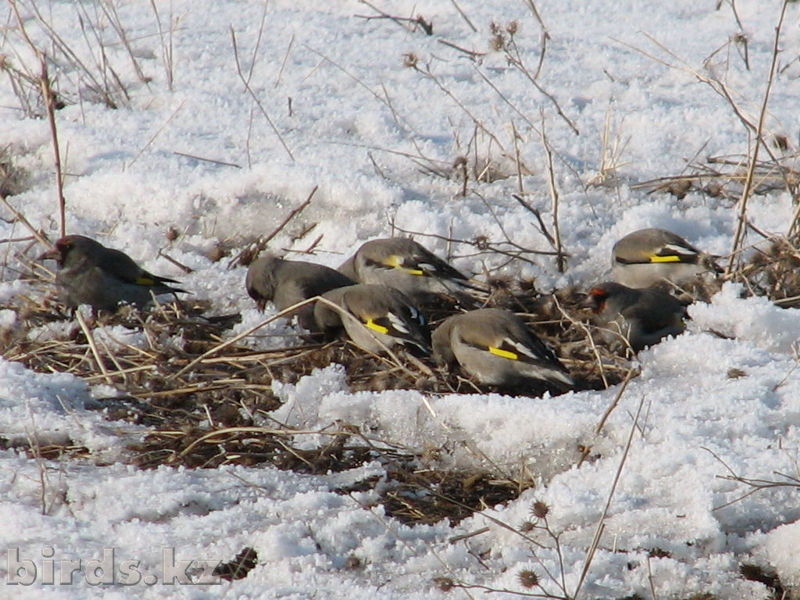
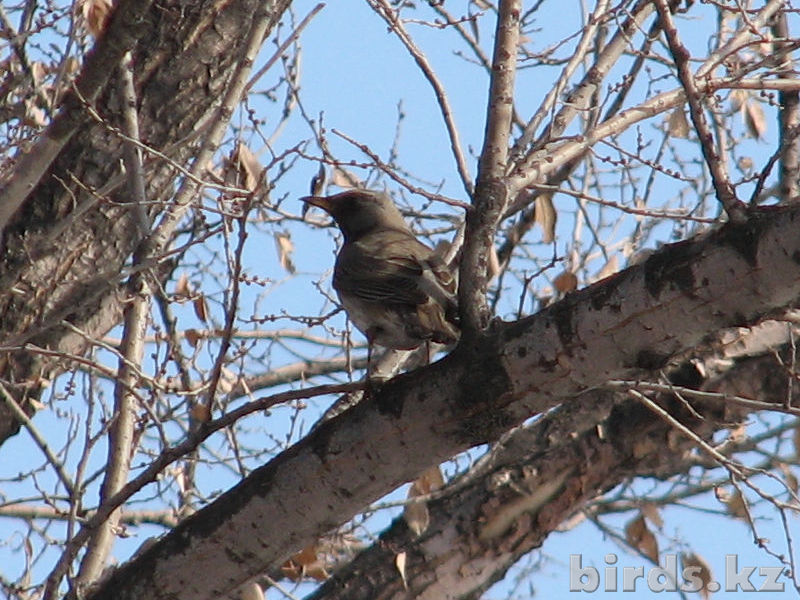
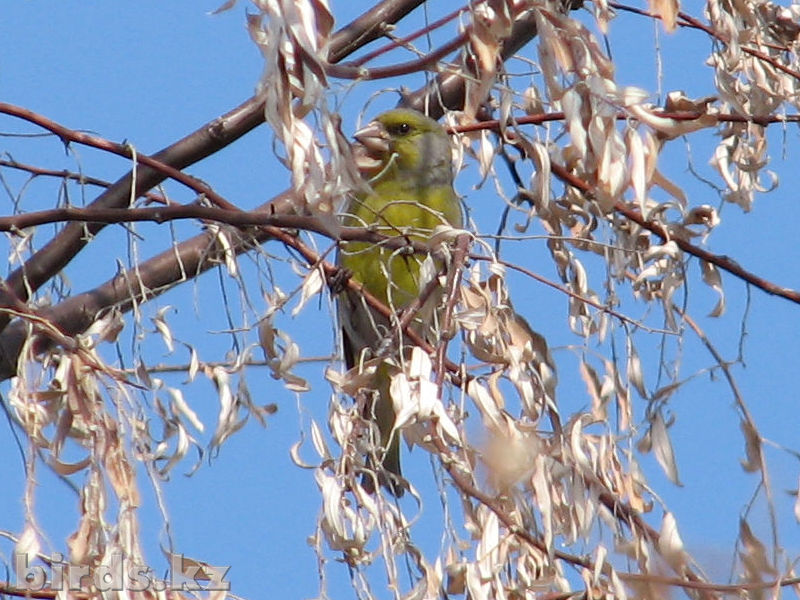
The windy at time overcast day. In Kazakhstan on the winter time the russian olive (or djida) is the basic forage to many birds. On the Ile river valley the russian olive vegetates in many places. Today several hours I observed birds near thickets of djida. Common birds are Magpies, Greenfinches, Black-throated Thrushes. Frightened off Thrushes often do not depart but fade. Considering grey protective coloring and immovability the birds become absolutely imperceptible. One Black-throated Thrush even nestled to a trunk of djida to be less appreciable. Sometimes sporadic Blackbirds, Tree Sparrows were observed. The flock of Fildfares was arrived. Fildfares was arrived orderly by flight at 20-30 birds, sat down on a high tree, looked round and dispersed on bushes. At flying away all actions occurred inversely: by a danger signal all birds flew up on a high tree, looked around and then together departed.
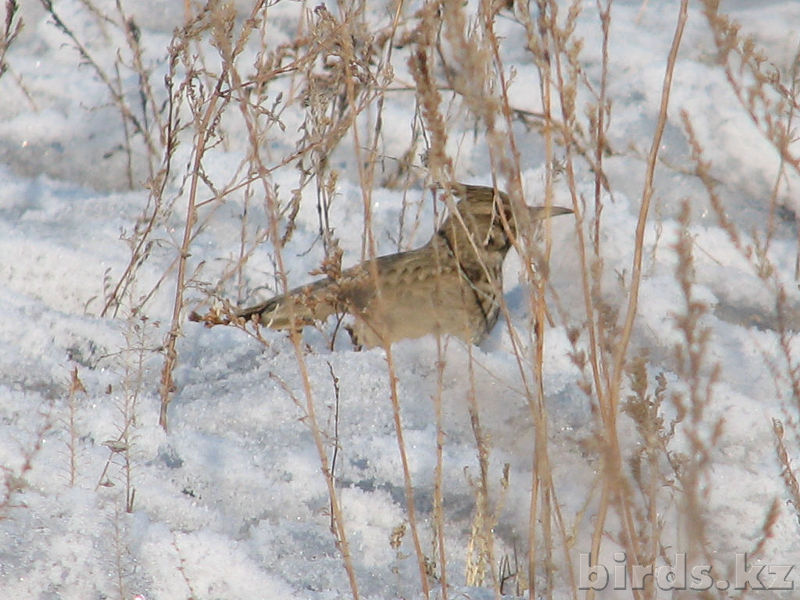
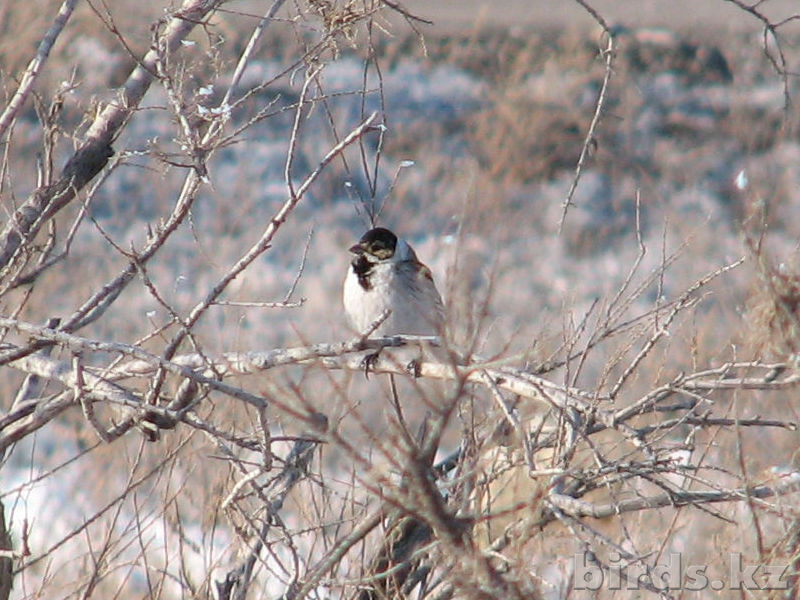
Almost at once I found Stock Pigeon. The Pigeon sat very conspicuously, almost horizontally. But I couldn't to come nearer to bird. The Pigeon flew on 500 meters. By binocular I beheld already two Pigeons, one of them seemed to me larger than another. Once in thickets I noticed the pair of Yellowhammers, but djida's thickets are not specific place to Yellowhammers, probably therefore birds so quickly departed. Heard Tit's peep, I thought that it Turkestan Tit's peep, but it were usual Great Tits. On open places the flocks of Grey-headed Goldfinches were observed often. These birds can be identified at once by the specific cheeping. Goldfinches often dart off, but also often come back to a feeding place. On thawed patches in the steppe saw fed Crested Larks. Also the male of Reed Bunting was fed together with larks. Once Bunting even sang a short song. Crested Larks went in for feeding, but I went in for Bunting. So we walked not noticing each other. When we paid attention to each other, less than three meters were between us.
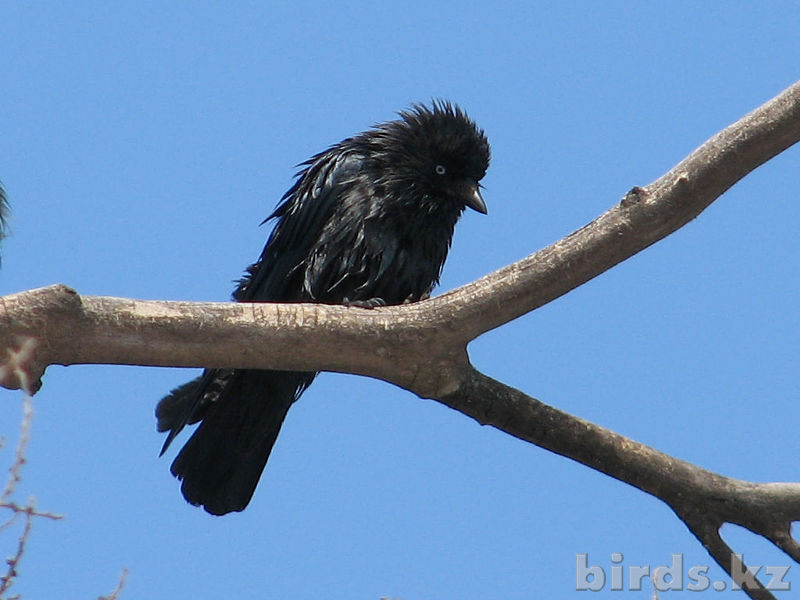
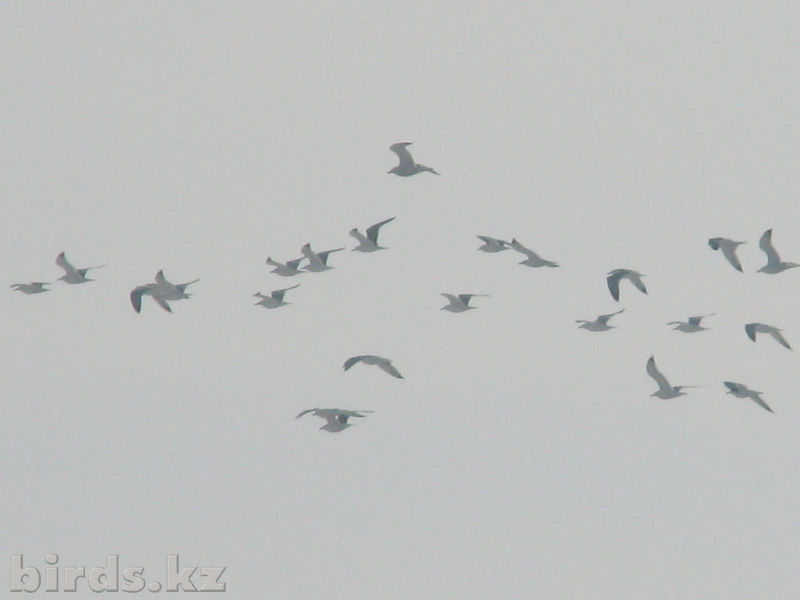
Incessant movement of Rooks and Jackdaws. Some birds are easy fed on the roadside, someone having bathed in the first pools dries on branches of trees, but the mostly Rooks and Jackdaws form incessant moving streams in the sky. But Hooded Crows behave more easy as if aren't going to depart anywhere. Sitting in the car I noticed the glanced shadows, but thought that Rooks fly somewhere again. But birds were not Rooks but the wedge of the large white gulls. In the flock were not less than 30 birds. One minute later five more gulls, and yet one minute later one more large flock flew by. Gulls seemed to me large and white, probably it were Caspian Gulls. First time I saw gulls flying by wedge.
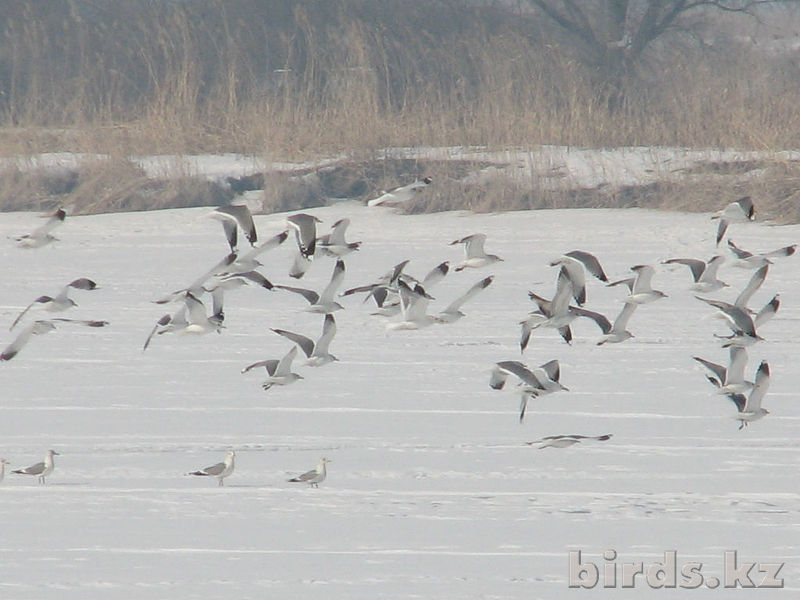
Till a dinner I observed one only raptor bird. Escorting by one crow the large brownish bird departed onto the south. Going by the sizes and width of wings bird was White-tailed Sea-Eagle. One more Sea-Eagle I saw over bower reservoir nearby Baiserke. In the same place Grey-headed Goldfinches were in the cane thickets, the pair of small ducks (probably Garganeys) were on the channel and one more large flight of gulls. Gulls were not large and with a darker back, probably Mew Gulls. Gulls a little roamed over the snowy reservoir and sat down onto the snow. I think Gulls had a rest on snow after the flight. Nobody flew over the channel, all birds sat or even laid still on the snow. At my approach of Gulls were up and then flew out.
In Baiserke I saw one very light Buzzard on a poplar, probably it was Long-legged Buzzard. But nearby Tonkeris on a column I saw Upland Buzzard. The shouting Rook sat about Buzzard. Buzzard swinging flew up, Rook like bodyguard departed in the wake of the Buzzard. In djida thickets nearby Tonkeris as usually Greenfinches and Black-throated Thrushes were fed.
1. Black-throated Thrush (Turdus atrogularis)

2. Fieldfare (Turdus pilaris)

3. Stock Pigeon (Columba oenas yarkandensis)

4. Grey-headed Goldfinches (Carduelis caniceps paropanisi)
5. Crested Lark (Galerida cristata iwanowi)
6. Northern Reed Bunting (Emberiza schoeniclus passerina)
7. Rook (Corvus frugilegus) and Jackdaws (Corvus monedula)
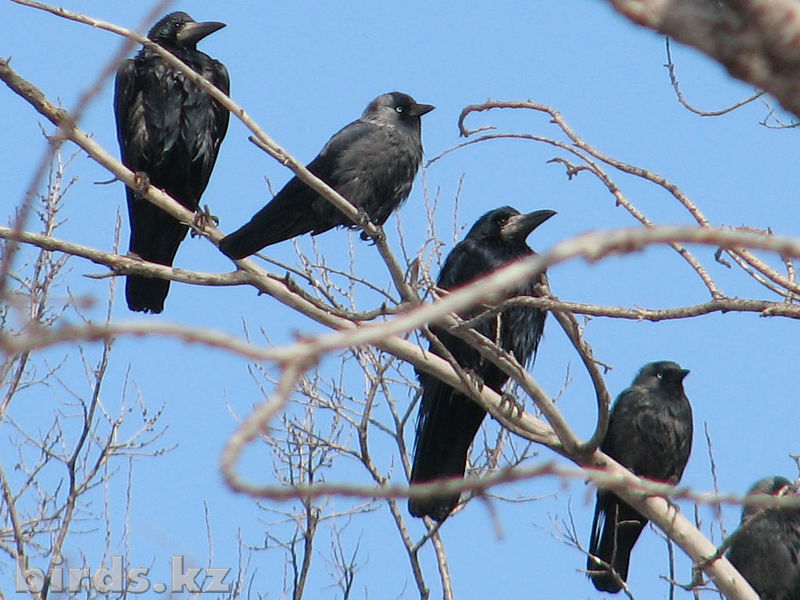
8. Eurasian Jackdaw (Corvus monedula)
9. Caspian Gulls (Larus cachinnans cachinnans)
10. Mew Gulls (Larus canus heinei)
11. Black-throated Thrush (Turdus atrogularis)
12. Greenfinch (Carduelis chloris turkestanicus)
calendar
2026
| jan | feb | mar | apr |
| may | jun | jul | aug |
| sep | oct | nov | dec |
| jan | feb | mar | apr |
| may | jun | jul | aug |
| sep | oct | nov | dec |
| jan | feb | mar | apr |
| may | jun | jul | aug |
| sep | oct | nov | dec |
| jan | feb | mar | apr |
| may | jun | jul | aug |
| sep | oct | nov | dec |
| jan | feb | mar | apr |
| may | jun | jul | aug |
| sep | oct | nov | dec |
| jan | feb | mar | apr |
| may | jun | jul | aug |
| sep | oct | nov | dec |
| jan | feb | mar | apr |
| may | jun | jul | aug |
| sep | oct | nov | dec |
| jan | feb | mar | apr |
| may | jun | jul | aug |
| sep | oct | nov | dec |
| jan | feb | mar | apr |
| may | jun | jul | aug |
| sep | oct | nov | dec |
| jan | feb | mar | apr |
| may | jun | jul | aug |
| sep | oct | nov | dec |
| jan | feb | mar | apr |
| may | jun | jul | aug |
| sep | oct | nov | dec |
| jan | feb | mar | apr |
| may | jun | jul | aug |
| sep | oct | nov | dec |
| jan | feb | mar | apr |
| may | jun | jul | aug |
| sep | oct | nov | dec |
| jan | feb | mar | apr |
| may | jun | jul | aug |
| sep | oct | nov | dec |
| jan | feb | mar | apr |
| may | jun | jul | aug |
| sep | oct | nov | dec |
| jan | feb | mar | apr |
| may | jun | jul | aug |
| sep | oct | nov | dec |
| jan | feb | mar | apr |
| may | jun | jul | aug |
| sep | oct | nov | dec |
| jan | feb | mar | apr |
| may | jun | jul | aug |
| sep | oct | nov | dec |
| jan | feb | mar | apr |
| may | jun | jul | aug |
| sep | oct | nov | dec |
| jan | feb | mar | apr |
| may | jun | jul | aug |
| sep | oct | nov | dec |
| jan | feb | mar | apr |
| may | jun | jul | aug |
| sep | oct | nov | dec |
| jan | feb | mar | apr |
| may | jun | jul | aug |
| sep | oct | nov | dec |
rare birds records
Squacco Heron (Ardeola ralloides)
© Andrey Kovalenko
2026-06-06
Almaty area, Sorbulak.
Great Snipe (Gallinago media)
© Vasilii Bastaev
2026-05-08
Karakol lake, Mangystau
Great Snipe (Gallinago media)
© Qanatbek Kenzhegulov
2026-04-14
Aktau, Mangystau region
Northern Wren (Troglodytes troglodytes)
© Alexandr Fedulin
2026-03-30
Big Year 2026
2. Aizhan Baitimbet (270)
3. Galym Baitimbet (267)
4. Zhaskairat Ermek (261)
5. Nikita Kanunnikov (228)
6. Gennadiy Dyakin (219)
7. Vladimir Muravskiy (219)
8. Andrey Kovalenko (196)
9. Sirimbet Zharilkasin (196)
10. Viktoriya Zvyaginceva (182)
unidentified birds
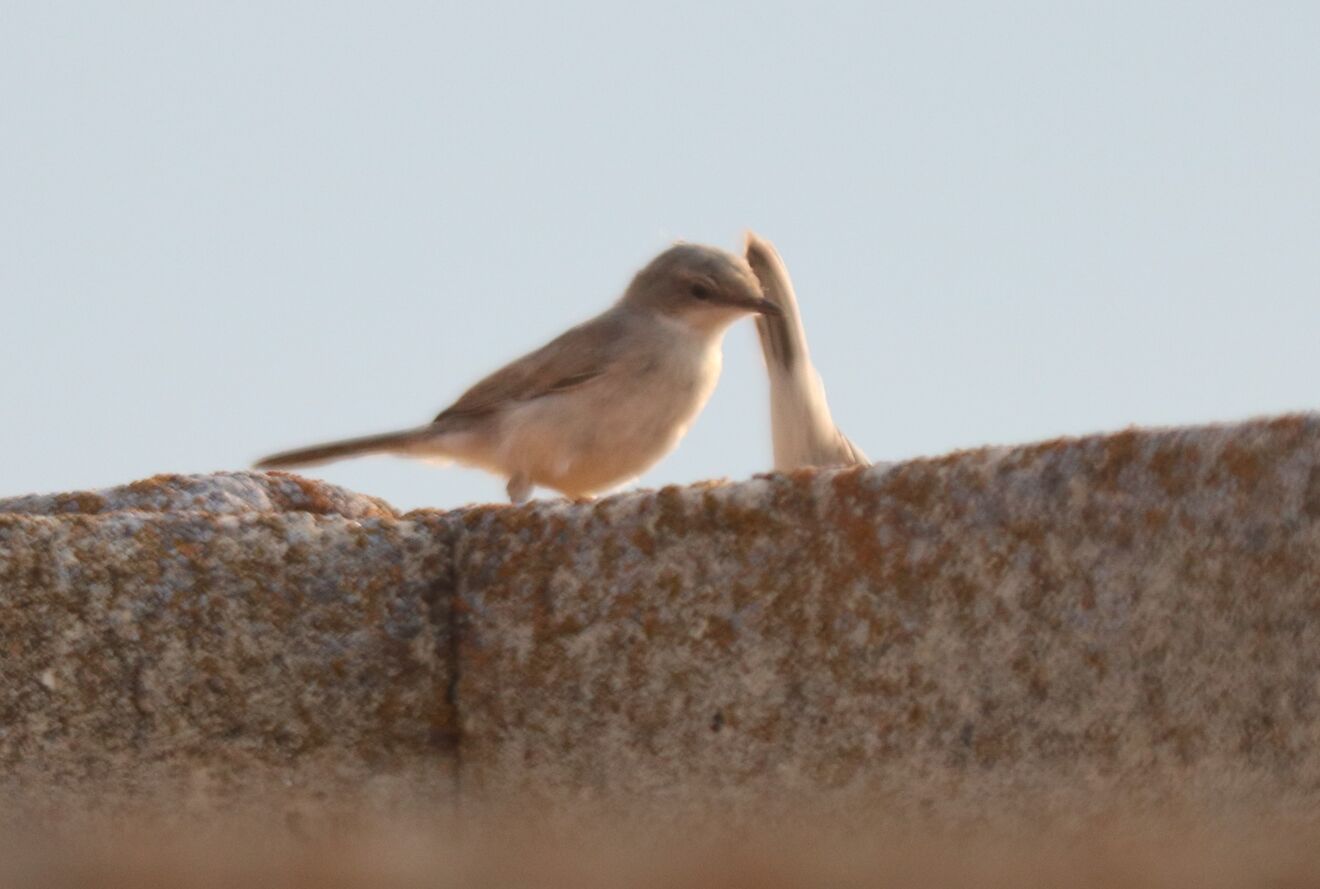
Жаскайрат Ермек: Садовая славка?
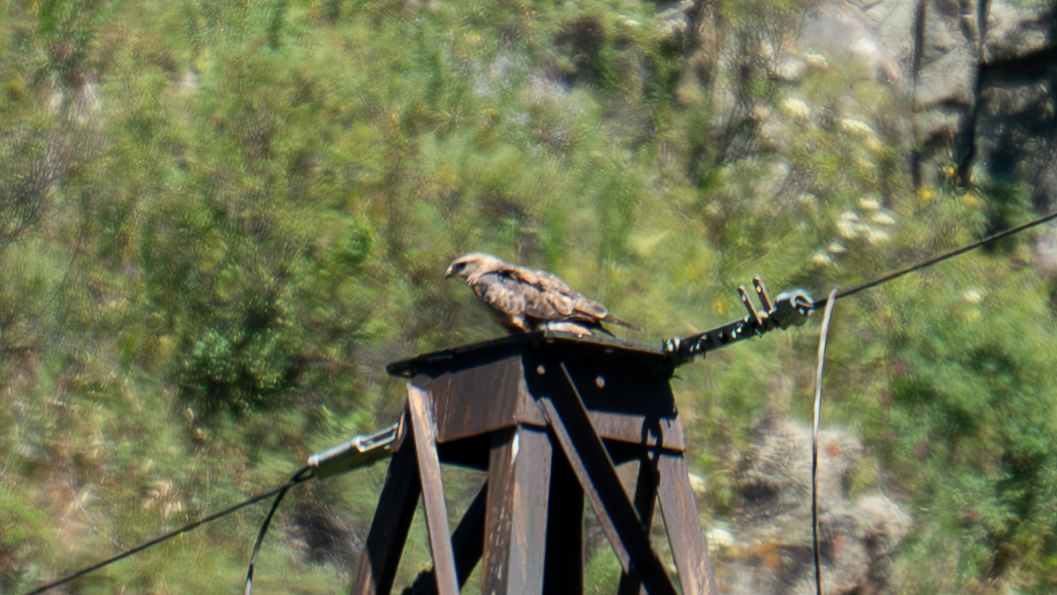
Руслан Абутрапов: Спасибо!
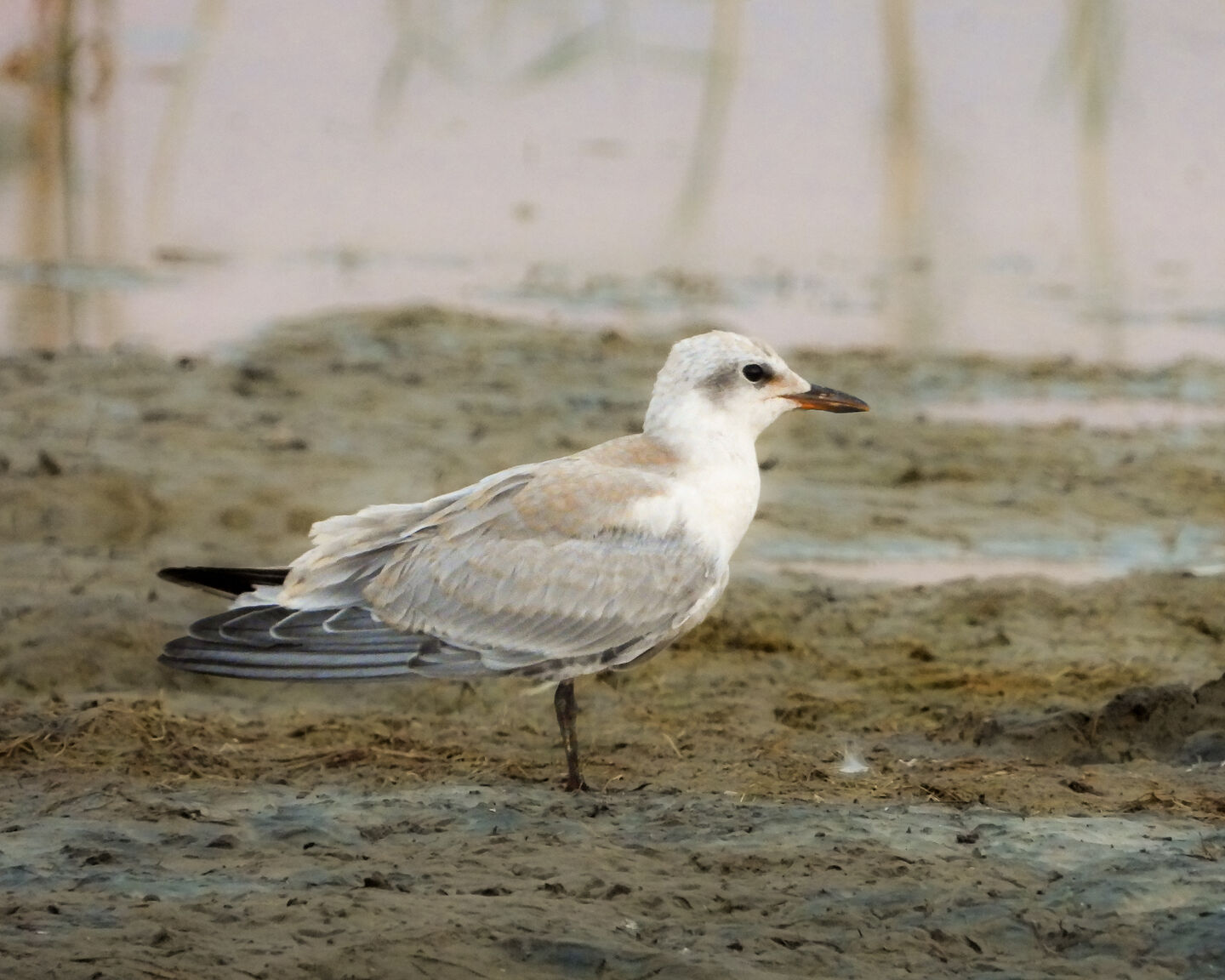
Анна Ясько: Чайконосая крачка.